
PORCELAIN VENEERS
Some people look at photos of themselves and immediately focus on their teeth. There is a slight chip on the front tooth. The gap that has always been there. The yellowish tint that whitening strips never quite fix. These small imperfections become the thing you see first, even when everyone else notices your genuine smile.
Porcelain veneers eliminate these concerns entirely. As one of the most requested cosmetic treatments at our dental clinic in San Antonio, veneers let patients design exactly the smile they want. Chips disappear. Gaps close. Stubborn discoloration vanishes beneath flawless ceramic. In as few as two appointments, the teeth that bothered you for years can look exactly how you always wished they did.
The Basics of Porcelain Veneers

A porcelain veneer is a wafer-thin shell of dental ceramic that permanently bonds to the front surface of a tooth. Each veneer measures roughly 0.5 millimeters thick, about the same as a fingernail. Despite this minimal thickness, modern porcelain provides remarkable strength and durability once bonded to the underlying tooth structure.
Veneers serve as custom covers for cosmetically flawed, structurally healthy teeth. The ceramic material can be shaped to any contour and shaded to any color, allowing your dentist to create teeth that look naturally perfect rather than obviously artificial. High-quality porcelain even mimics how natural enamel interacts with light, producing depth and translucency that makes veneers virtually indistinguishable from real teeth.
Unlike crowns that encase the entire tooth, veneers preserve most of your natural tooth structure. Only a thin layer of enamel from the front surface needs to be removed to accommodate the veneer. This conservative approach maintains tooth integrity while still delivering a dramatic cosmetic transformation.
Cosmetic Problems Veneers Solve
The versatility of porcelain veneers makes them a go-to solution for multiple cosmetic concerns, often addressing several issues simultaneously with a single treatment.
Permanent discoloration. Some staining resists even professional whitening treatments. Tetracycline antibiotics taken during childhood, excessive fluoride exposure, dental trauma, and age-related internal darkening can create discoloration that bleaching agents cannot reach. Veneers cover these stains completely, providing the bright white shade that whitening could not achieve.
Chips and cracks. Minor damage to front teeth creates a disproportionate cosmetic impact. A small chip catches your eye and others’ attention every time you smile. Veneers restore smooth, undamaged contours while reinforcing the weakened tooth against further chipping.
Gaps between teeth. Spaces between front teeth bother many patients who otherwise have healthy smiles. Veneers can be made slightly wider than your natural teeth, closing gaps without orthodontic treatment. This approach works well for small to moderate spacing.
Misshapen or uneven teeth. Teeth that are naturally small, pointed, or irregularly shaped disrupt smile harmony. Veneers create uniform proportions, establishing the symmetry that makes smiles appear attractive and balanced.
Worn edges. Years of use or grinding habits gradually shorten teeth and flatten their biting edges. This wear can make people look older and affect how teeth meet when biting. Veneers restore original length and proper edge contours.
Minor misalignment. Slightly crooked or angled teeth sometimes respond well to veneers. By adjusting the thickness and contour of each veneer, your dentist can create the appearance of straighter teeth without orthodontics. This approach works for mild cases but not severe crowding or bite problems.
From Consultation to Completed Smile
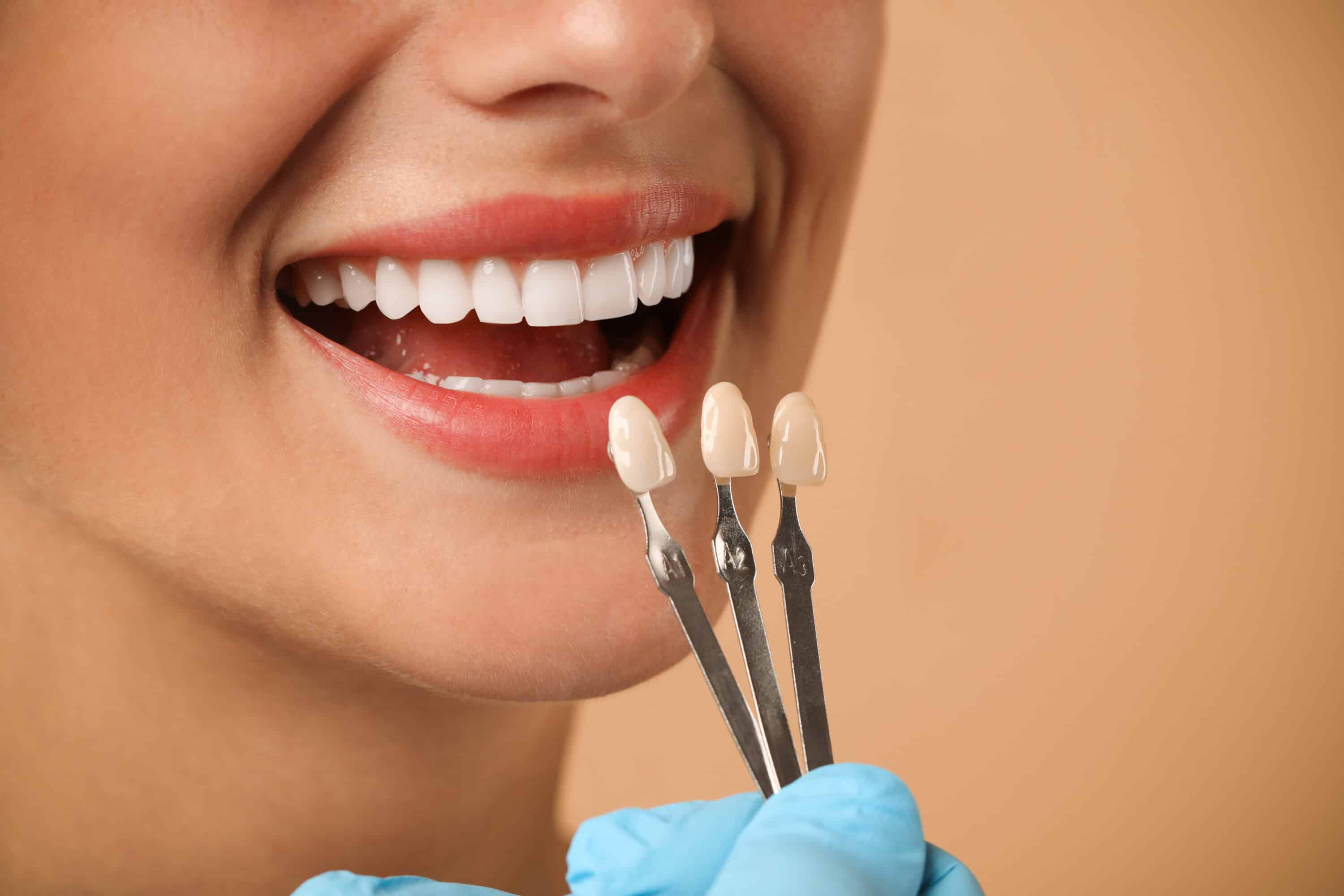
Creating porcelain veneers typically requires two appointments at our San Antonio office, with about two weeks between visits. The process involves careful planning, precise preparation, and artistic execution.
First Appointment: Design and Preparation
Your veneer journey begins with a detailed discussion of your goals. What specifically bothers you about your current smile? What changes would make you happy? Our team examines your teeth, takes photographs, and may create diagnostic models to plan your new smile precisely.
Once the design is established, tooth preparation begins. Your dentist removes a thin layer of enamel from each tooth receiving a veneer, creating space for the ceramic shell and ensuring a natural final contour. This step is performed under local anesthesia for complete comfort.
After preparation, impressions capture the exact shape of your prepared teeth. These records are sent to a dental laboratory, where skilled ceramists handcraft your custom veneers. Before you leave, temporary veneers protect your prepared teeth and give you a preview of your new smile’s appearance.
Second Appointment: Bonding Your Veneers
When your permanent veneers arrive from the laboratory, you return for the bonding appointment. Your dentist removes the temporaries and carefully positions each veneer, checking fit, color match, and your satisfaction with the appearance.
Once everything looks perfect, a special bonding cement adheres each veneer permanently to its tooth. A curing light hardens the cement in seconds. After final polishing and bite adjustments, you leave with your completed smile. The transformation is immediate and lasting.
How Veneers Compare to Other Options
Patients considering cosmetic improvements often wonder how veneers compare with alternatives. Each treatment has its place, and understanding the differences helps you make the right choice.
Veneers vs. Teeth Whitening
Whitening treats only color, and only certain types of staining respond to bleaching agents. If your primary concern is surface staining on otherwise well-shaped teeth, professional whitening costs less and preserves all your enamel. However, if staining is intrinsic, if your teeth have shape or size issues, or if you want a brighter shade than whitening can achieve, veneers provide a more comprehensive solution.
Veneers vs. Dental Bonding
Composite bonding uses tooth-colored resin applied directly to teeth, shaped by hand, and hardened with light. Bonding costs less than veneers and can be completed in one visit. However, composite stains over time, chips more easily, and typically lasts 5 to 7 years compared to 10 to 15 years for porcelain veneers. For long-term results on prominent front teeth, veneers are usually more cost-effective despite the higher initial investment.
Veneers vs. Crowns
Crowns cover the entire tooth and provide structural reinforcement for teeth with significant damage or large fillings. Veneers cover only the front surface and work best on teeth that are cosmetically flawed but structurally sound. If your tooth needs protection and cosmetic improvement, a crown may be the better choice. For purely cosmetic concerns on healthy teeth, veneers preserve more of the natural structure.
Making Your Veneers Last
Quality porcelain veneers routinely last 10 to 15 years with proper care, and many patients enjoy their veneers for 20 years or longer. Several factors influence how long your veneers will serve you.
Daily oral hygiene matters. Brush twice daily with a non-abrasive toothpaste and floss every night. While veneers themselves cannot decay, the tooth structure beneath them can. Keeping your gum line and margins clean prevents problems that could compromise veneers from underneath.
Habits affect longevity significantly. Biting fingernails, chewing ice, opening packages with your teeth, or using your teeth as tools can create forces that can crack or dislodge veneers. Treat your veneers as you would treat natural teeth you want to protect.
Grinding and clenching pose particular risks. If you grind your teeth at night, the repeated pressure can wear down or fracture veneers over time. A custom nightguard protects both your veneers and natural teeth from grinding damage.
Regular dental visits allow our team to monitor your veneers, catch any issues early, and keep your entire smile healthy. Professional cleanings maintain the beautiful appearance of your investment while supporting the underlying tooth structure.
Choosing the Right San Antonio Dentist for Veneers
Veneer outcomes depend heavily on the skill and artistic vision of your dental team. Technical precision determines fit and longevity, while aesthetic judgment creates smiles that look naturally beautiful rather than obviously fake.
Since 1986, our practice has helped San Antonio patients transform their smiles through cosmetic dentistry. Our San Antonio dentists combine extensive training in veneer techniques with the artistic sensibility needed to design smiles that enhance each patient’s unique facial features.
We invest significant time in the planning phase because great results require it. Rather than rushing into preparation, our team discusses your goals thoroughly, shows you previews of potential outcomes, and ensures complete agreement on the plan before beginning any irreversible work. This collaborative approach consistently produces smiles that patients love.
Our commitment to honest guidance means we tell you when veneers make sense and when another option might serve you better. Not every cosmetic concern requires veneers, and we recommend the treatment that best fits your situation rather than defaulting to the most expensive option.
Porcelain Veneer Questions Answered
How much do porcelain veneers cost?
Individual porcelain veneers typically range from $1,000 to $2,500 per tooth, depending on geographic location, case complexity, and the dental team’s expertise. Most patients enhance their six to eight most visible upper teeth, which can increase full treatment costs to $6,000 to $20,000. During your consultation at our dental clinic in San Antonio, we provide specific pricing based on your treatment plan. We also discuss payment options and financing to help make your smile makeover accessible.
Do veneers damage your natural teeth?
Veneer preparation involves removing a thin layer of enamel, typically 0.3 to 0.5 millimeters thick. This removal is permanent, meaning teeth that receive veneers will always need some form of coverage. However, this represents far less tooth reduction than crowns require. When performed skillfully on appropriate candidates, veneers actually protect underlying teeth by providing a durable ceramic barrier. The key is proper patient selection and precise preparation technique.
How long do porcelain veneers last?
Most porcelain veneers last between 10 and 15 years before requiring replacement. Many patients enjoy their veneers for 20 years or more with excellent care. Longevity depends on oral hygiene habits, whether you grind your teeth, and how you use your teeth day to day. Avoiding habits like nail biting and ice chewing significantly extends the lifespan of veneers. When veneers eventually need replacement, the process is similar to the original procedure.
Can you eat normally with veneers?
Yes. Once bonded, porcelain veneers function like natural teeth for everyday eating. You can enjoy most foods without restriction. However, exercising reasonable caution protects your investment. Avoid biting directly into very hard foods, such as whole apples, raw carrots, or crusty bread, with your veneered teeth. Cut these foods into pieces instead. Also, avoid chewing ice, hard candies, or other items that could crack any tooth, natural or veneered.
Will veneers look fake or too white?
Veneers look fake only when they are designed poorly or made from inferior materials. Quality porcelain possesses the same translucency and light-reflecting properties as natural enamel. Skilled ceramists create subtle color variations, surface texture, and individual characteristics that make each veneer appear real. During planning, you choose your desired shade. While some patients want dramatically whiter teeth, others prefer a more natural look. Our team helps you select a shade that achieves your goals while still looking believable for your skin tone and facial features.
Are veneers reversible?
Traditional porcelain veneers are irreversible because tooth preparation permanently removes enamel. Once prepared, teeth will always need veneers or another form of coverage. This permanence makes thorough consultation essential before proceeding. Some ultra-thin veneer options require minimal or no preparation, making them closer to reversible, but these work only for specific situations. Your dentist will explain which approach suits your case during your evaluation.
Does dental insurance cover veneers?
Most dental insurance plans classify veneers as cosmetic and do not provide coverage. However, if veneers are restoring teeth damaged by trauma or decay, some plans may cover a portion of the cost. Our team verifies your specific benefits and explains exactly what your plan does or does not cover. For treatments not covered by insurance, we offer financing options that spread costs into manageable monthly payments.
How much do veneers cost in San Antonio?
In San Antonio, porcelain veneers typically cost between $1,200 and $2,500 per tooth, depending on the dental practice and the complexity of the case. A full set covering the upper front eight teeth ranges from approximately $9,600 to $20,000. Prices vary based on the quality of the materials used, the expertise of the ceramist crafting your veneers, and the level of customization. At Orsatti Dental, we provide detailed cost estimates during your consultation after evaluating your specific needs and goals.
How much is a full set of porcelain veneers?
A full set of porcelain veneers typically includes 6 to 10 teeth on the upper arch, covering the teeth visible when you smile. At current market rates, this ranges from $6,000 to $25,000 total, depending on the number of teeth treated and the quality of materials and craftsmanship. Some patients also choose to veneer their lower front teeth for complete smile harmony, adding to the total investment. We work with each patient to determine exactly how many veneers will achieve their desired result and provide transparent pricing before any work begins.
Is there a downside to veneers?
Veneers have several considerations patients should understand before proceeding. The primary downside is irreversibility. Tooth preparation permanently removes enamel, meaning you will always need veneers or another restoration on those teeth. Some patients experience temporary sensitivity to hot and cold after placement, though this usually resolves within a few weeks. Veneers can chip or crack under excessive force, so habits like nail-biting or ice-chewing must stop. They also require eventual replacement, typically after 10 to 15 years. Finally, the upfront cost is significant, and most insurance plans do not cover cosmetic treatments. Despite these factors, most patients find the benefits far outweigh the drawbacks.
Who makes a good candidate for porcelain veneers?
Ideal veneer candidates have structurally healthy teeth with cosmetic flaws. You should have adequate enamel remaining for proper bonding, as veneers adhere best to natural tooth structure rather than existing dental work. Healthy gums free from periodontal disease provide the foundation for successful treatment. Good candidates are also committed to maintaining excellent oral hygiene and avoiding habits that could damage veneers. People who grind their teeth heavily may need to wear a nightguard to protect their investment in their teeth. During your consultation, our team evaluates your oral health, discusses your goals, and honestly assesses whether veneers represent the right solution for your specific situation.
See What Veneers Can Do for Your Smile
The teeth you see in the mirror do not have to stay the way they are. Porcelain veneers offer a proven path to the smile you have imagined, addressing multiple concerns in just two appointments.
Your consultation provides an opportunity to explore possibilities without commitment. Our team evaluates your teeth, listens to your goals, and explains honestly whether veneers represent the best solution for your situation. You leave with clear information and realistic expectations.
Contact Orsatti Dental at (210) 479-8989 to schedule your consultation for porcelain veneers. Our San Antonio office is located at 15303 Huebner Rd, Bldg #14, San Antonio, TX 78248.
We welcome patients Monday through Thursday from 8:00 AM to 5:00 PM and Friday from 8:00 AM to 12:00 PM.
Stop focusing on imperfections and start loving your smile. Our experienced team is ready to show you what porcelain veneers can accomplish.